
Mobile-First Design: Why It’s Essential For Your Dental Practice
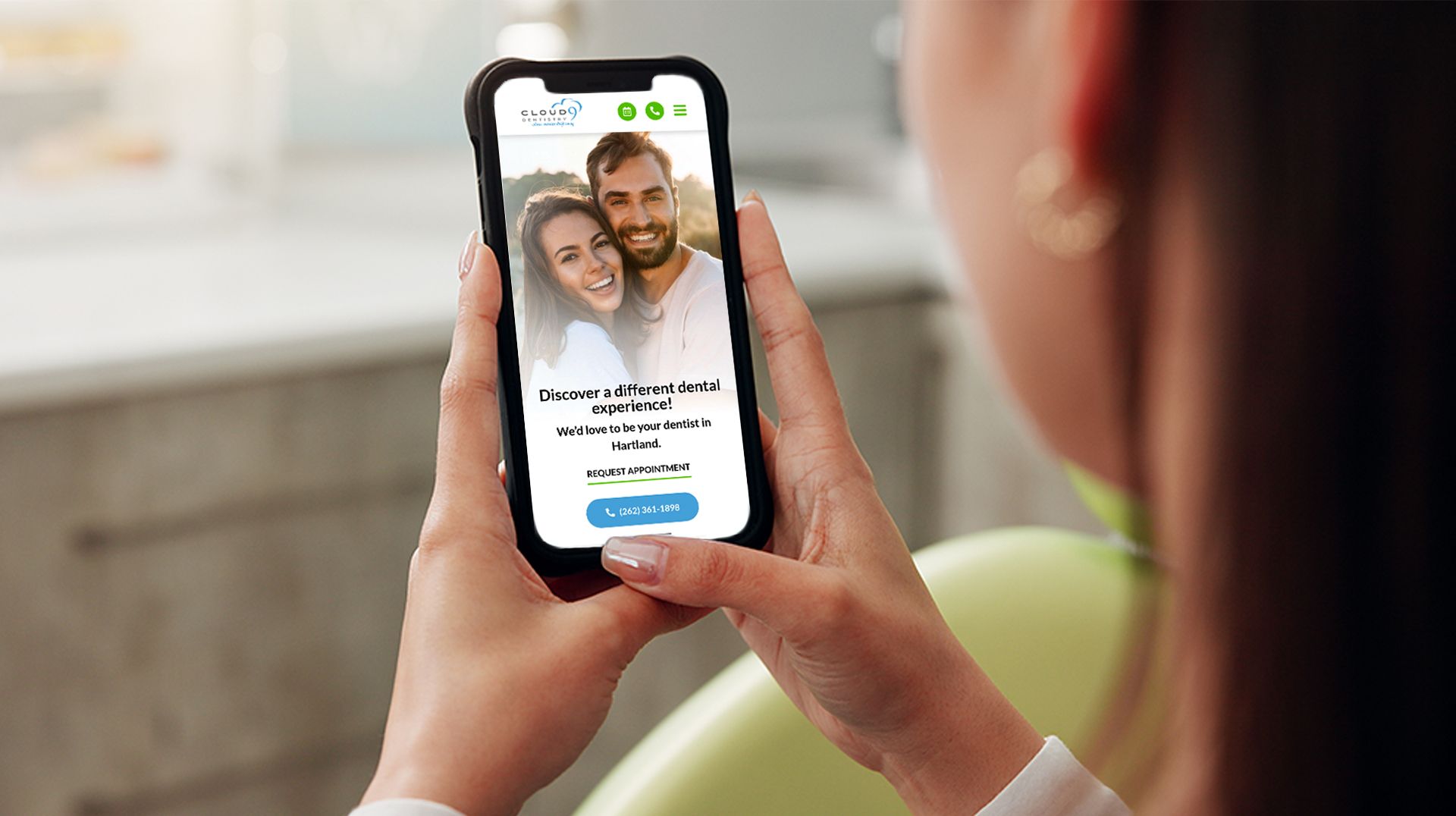
Your dental website isn’t just a brochure. It’s the front door!
These days, prospective patients almost always start their journey online. Research shows that roughly 71% of patients search for a dentist online before booking an appointment.
If your website feels slow, confusing, or out-of-date, you may lose them before you even meet them. That’s why modern dental sites must do more than look nice. They need to convert.
IMPROVE YOUR WEBSITE. SCHEDULE A CALL NOW.
What the data demands – and what your dental practice website needs:
- Over 60% of dental-related searches now come from mobile devices.
- Visitors expect fast, frictionless experiences; slow or clunky pages kill conversions.
- Patients trust what they see: real-photos, team bios, clear credentials, reviews, and testimonials all build confidence.
In short, a modern dental website must be fast. It must reflect trust. And it must make it easy for a potential patient to take action – ideally in under a minute.
What works now (for 2026 and beyond). Design and UX essentials.
1. Mobile-first, lightning-fast performance
Design for phones first. Use responsive or adaptive layouts, make buttons big enough for fingers (not cursors), and ensure your pages load fast even on weaker connections. On mobile, quick access to contact info, clear services, and “Book Now” or “Call Us” buttons can make or break whether a visitor becomes a patient.
2. Clean, clear, patient-focused navigation
Avoid clutter. Keep menus simple with About, Services, Reviews, New Patients, and Contact pages. Make it easy to find what matters, fast.
Use white space, clear headings, and avoid overwhelming visitors with too much content at once. The goal: Get them from “Who are you?” to “Can I book now?” without friction.
3. Build trust from the first click
Use real-world photos: your office, your team, your patients (with consent). Authentic visuals create a human touch that stock photos can’t match.
Show reviews, testimonials, and credentials. Let visitors see that real people love your practice. A site that feels professional and trusted influences decisions.
4. Use content that educates and converts
A good website answers questions. What services do you offer? What’s the patient process? What insurance or financing options exist? Easy-to-find, well-organized content builds trust.
Consider adding short videos, office tours, and FAQ pages. These help visitors feel comfortable, informed, and ready to book.
Your website now has to satisfy humans and AI
Website design in 2026 isn’t just about creating a great patient experience – it’s also about making sure your content is understood, selected, and cited by AI systems. Google AI Overviews, Gemini, ChatGPT Search, and other LLM-powered experiences pull answers directly from websites, rewarding dental practices that provide clean, structured, well-written information. This is changing what “good design” means. Layout, content, SEO, and schema now work together. If your site doesn’t communicate clearly to AI, you risk being invisible in the new search environment.
WE CAN HELP. BOOK A CALL TODAY!
Structured FAQs are now essential
We’re embedding FAQ blocks on homepages and service pages because they do double duty. Patients love fast answers, and AI Overviews rely heavily on FAQs to deliver concise, trustworthy responses. When your practice provides authoritative explanations to “How much does a dental crown cost?” or “Are dental implants painful?”, your content is far more likely to be cited by AI – placing your brand directly in front of high-intent patients. This isn’t theoretical. Practices with robust FAQ structures already see stronger visibility and improved conversion because search engines can validate them as reliable sources.
Content depth = authority in the AI era
Blogging used to be “nice to have.” In the AI-driven search world, it’s mandatory. LLMs reward authority, accuracy, and freshness, which means practices publishing regular, educational blog posts build far more trust with both patients and search engines. A strong publishing cadence also supports E-E-A-T signals – experience, expertise, authority, and trust – now core to how AI models decide what information to surface. When you consistently share insights, explain procedures, and answer common patient questions, you’re not just marketing; you’re training AI to recognize your practice as an expert in dentistry.
Design now includes schema and answer optimization
Modern dental website design includes proper schema markup, structured content blocks, and page layouts built for answer retrieval. Think clear headings, short answer paragraphs, procedure overviews, FAQ accordions, and internal linking that helps AI systems follow the story of your expertise. A clean, elegant design still matters, but answer-level structure matters just as much. Websites built this way perform better in search, appear more often in AI summaries, and convert more patients because information is visible, accessible, and credible from every angle.
The future of dental websites: helpful, human, and AI-friendly
As the search landscape shifts, the practices that win will be those combining great UX with strategic content depth. Your website can’t just tell patients what you do — it has to prove you’re a trusted authority in dentistry. That’s where this new layer of FAQ development, schema support, long-form content, and consistent blogging comes in. Great design now means designing for humans and for the AI systems that help patients choose their next dentist.
Why this matters – especially for DSOs and multi-location practices
For groups and DSOs with multiple clinics, a solid site strategy pays off big when:
- You keep a consistent brand experience across locations, while still letting each clinic feel local, professional, and welcoming.
- You deliver a mobile-first, seamless experience. Essential when so many prospective patients cold-search “dentist near me,” often while on the go.
- AI-ready content creates consistency across diverse brands. Even when locations have different identities, structured FAQs, schema markup, and authoritative blog content ensure every site meets the same performance standards. This levels up visibility, improves search placement, and drives system-wide new-patient growth without forcing a one-brand model.
- Centralized content strategy reduces duplication and boosts authority. DSOs can create shared clinical content, FAQs, and educational resources that feed all locations, but remain unique, allowing each brand to maintain its own voice while benefiting from enterprise-strength SEO and AI-overview optimization. The result: stronger authority signals, lower content costs, and more visibility across all affiliates
Smart design choices make or break engagement
Color psychology still plays a role in dental website performance. Calming, clinical palettes like blues, teals, and soft neutrals tend to outperform loud or overly saturated colors because they signal cleanliness, professionalism, and trust. Bold accents are great for CTAs, especially contrast colors that support the brand. The overall palette should never compete with the message. Beyond color, the flow of content influences how long visitors stay and how effectively search engines interpret page structure. Start with a clear value statement, follow with trust signals, highlight the practitioners (people want to do business with people they like), emphasize services, and guide visitors toward a single, prominent action. When content is organized with purpose, patients feel oriented, and search engines understand what the page is about.
Too many “helpful” features quickly turn into conversion killers
Pop-ups, chat widgets, sticky CTAs, appointment bars, and promotional banners can all increase conversions when deployed strategically. When overused or triggered too soon, they overwhelm visitors, spike bounce rates, and confuse the page hierarchy that AI systems analyze. A good rule of thumb: one main CTA, one assistive tool, and one optional engagement element per page. For example, a single exit-intent pop-up, a discreet chat icon, and a clean “Book Now” button in the header work well together. What you want to avoid is a pop-up firing within two seconds of landing, a chatbot that chases the cursor, and multiple competing promotions layered on top of each other. Modern design is clean, supportive, and intentional. The fewer distractions, the more likely patients are to stay, read, and convert.
Accessibility is now a ranking signal – and a trust signal
Website accessibility isn’t just a compliance box anymore. It’s a core part of user experience and Search Engine Optimization. Patients with visual, mobility, or cognitive differences should be able to navigate your site without barriers. Clear contrast ratios, alt text for images, readable font sizes, keyboard navigation, and ADA-conscious layouts improve usability for everyone. Search engines increasingly reward accessible websites because they demonstrate credibility, professionalism, and patient-centric design. For practices, it’s simple: a more inclusive site earns more engagement and signals trust.
Local SEO integration starts with smart design
A website doesn’t rank locally by accident. Design choices, like embedding Google Maps, listing precise NAP information (name, address, phone) in the header or footer, and adding local schema markup, help search engines understand geography. DSOs with multiple locations need structured location pages with unique content, consistent formatting, and clear CTAs tailored to each clinic. Without this foundation, even a gorgeous website struggles to appear in “dentist near me” searches.
Conversion-optimized forms matter as much as CTAs
Forms are often the last barrier between interest and a booked appointment. Design them intentionally: short, mobile-friendly, finger-friendly, and fast. Limit the number of fields. Label everything clearly. Add trust cues, like HIPAA-safe statements, security assurances, or brief instructions. When forms feel easy and safe, patients complete them. If they feel long, confusing, or technical, they abandon them, often within seconds.
Be sure to monitor your online scheduling tool. It’s important that it doesn’t become a barrier to entry when no convenient appointment times are available, and no alternate option (e.g., “If you can’t find what you want, give us a call!”) is evident. These tools can work great, but they can also inhibit conversions.
Analytics and tracking must be baked into the build
Design isn’t complete without measurement. Websites should launch with Google Analytics 4, call tracking, form tracking, and more. Without these insights, practices and DSOs can’t see what frustrates users, where people get stuck, or which design choices convert. In 2026, a “pretty” website without analytics is the equivalent of a dental office without X-rays. You’re guessing, not diagnosing.
Security and technical trust factor into patient confidence
Security certificates, HIPAA-conscious forms, encrypted connections, and trustworthy hosting environments directly impact user confidence. Patients notice browser warnings. They notice when a site feels slow or unstable. Technical infrastructure is part of design because it shapes how safe and professional the experience feels. DSOs especially need consistent security across all brands to protect patient information and maintain system-wide credibility.
DON’T MISS OUT – TALK TO ONE OF OUR EXPERTS!
The bottom line: Your website is your digital reception desk.
Think of your site as your front-desk team working 24/7.
When built right, it warmly welcomes visitors, answers their questions, builds trust, and gently guides them toward booking an appointment.
FAQs
1. Why is mobile-first design important for a dental practice website?
Mobile-first design ensures your dental practice website is built for the way patients actually search the majority of the time – on their phones. With 60% of dental searches happening on mobile devices, a mobile-first layout loads faster, is easier to navigate, and improves both user experience and SEO performance.
2. How does mobile-first design improve patient conversion on a dental practice website?
When a dental practice website is optimized for mobile-first design, patients can quickly find your services, reviews, and booking options. A clean mobile layout reduces friction, lowers bounce rates, and increases conversions because patients can take action with fewer taps.
3. What features should a modern dental practice website include to support mobile-first design?
Key features include fast-loading pages, clear CTAs, finger-friendly buttons, simple navigation, responsive layouts, compressed images, mobile-ready forms, and a prominent call or booking button. These elements help a dental practice website deliver a seamless mobile-first design experience.
4. Can mobile-first design help my dental practice website rank higher in search engines?
Yes. Search engines prioritize speed, usability, and relevance, core components of mobile-first design. A dental practice website built with mobile-first principles typically earns better visibility in local search results, AI overviews, and voice search experiences.
5. What’s the biggest mistake dental practices make when building a mobile-first design website?
Many practices focus on desktop aesthetics first and treat mobile as an afterthought. On a dental practice website, this often leads to cluttered pages, tiny buttons, hard-to-read text, and slow performance. Prioritizing mobile-first design from the start prevents these issues and improves both patient experience and SEO.
Share:

Stay In The Know!
Join 20,000 dental colleagues today!
Subscribe to our weekly updates, and/or request a free brochure and product samples.

